Prompt · 帖子正文
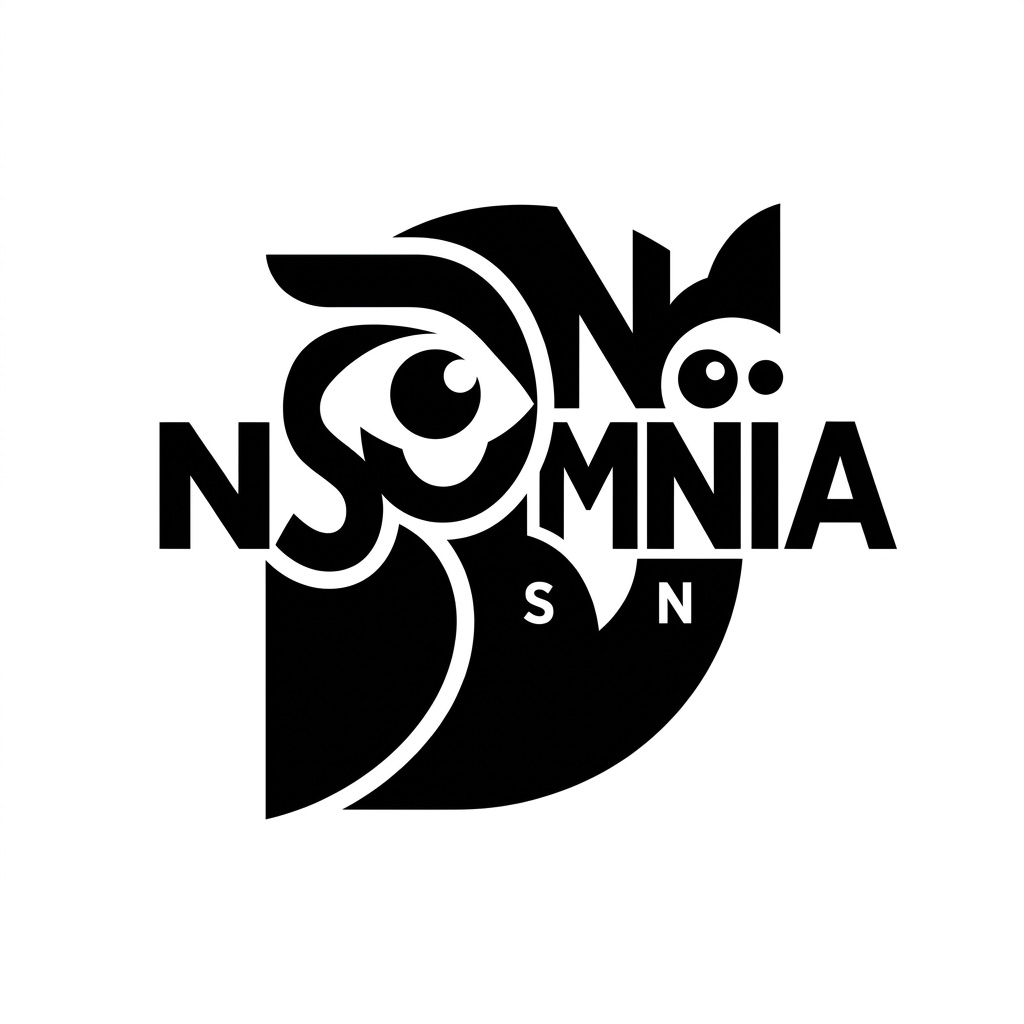
黑白负空间概念 Logo · 失眠
先给三个「概念锚点」(几何字母融合符号、字母拼成动物、几块碎形组成生物),要求只提取它们的视觉 DNA,再按十步语义变换让字母笔画与主体剪影共用轮廓、用白色负空间刻出眼睛和第二层含义,最后只出一个纯 #000 / #FFF 的极简标志
Prompt English
INPUT: Insomnia

CONCEPT ANCHOR 1:
"Intelligent black-and-white conceptual logo design — bold geometric letterforms seamlessly merged with technological, ecological, scientific, financial, or cultural symbols; clever negative-space intersections; highly recognizable pictograms; solid black shapes; clean white cutouts; vector precision."

::

CONCEPT ANCHOR 2:
"Typographic animal silhouette — a short word physically transformed into a recognizable creature, with letter strokes functioning as anatomy, tails, ears, bodies, or limbs; ultra-clever letterform construction; white negative-space details; playful but sophisticated visual intelligence."

::

CONCEPT ANCHOR 3:
"Extreme minimalist abstract silhouette — a recognizable living form constructed from a handful of disconnected black organic shapes; strategically placed white eyes or focal details; implied contours; radically reduced anatomy; enormous white negative space; elegant optical storytelling."

INSTRUCTION:

Find the exact visual center of these three concepts.

Ignore the literal cats, cloud icons, technology symbols, financial charts, and reference-specific letters.

Extract only their visual DNA.

Transform Insomnia into a single iconic black-and-white visual identity where typography, geometry, recognizable silhouettes, and negative space operate as one integrated design.

The result should look as though a master logo designer discovered the simplest possible arrangement of black and white shapes capable of communicating the subject.

SUBJECT ANALYSIS:

Analyze Insomnia and infer:

- Its strongest recognizable visual identity.
- The most meaningful word, name, acronym, or short phrase associated with it.
- Its essential symbolic characteristics.
- Shapes naturally associated with the subject.
- Potential visual similarities between letters and those shapes.
- Opportunities for double meanings and optical illusions.
- The minimum number of elements required to communicate the idea.

SEMANTIC TRANSFORMATION:

1. Identify the strongest silhouette or symbol associated with Insomnia.

2. Examine the anatomy of its name or selected keyword.

3. Find structural similarities between the letterforms and the silhouette.

4. Transform letters into components of the subject whenever possible.

5. Use solid black masses to establish the recognizable form.

6. Carve meaningful details out of those masses using pure white negative space.

7. Merge object boundaries and letter boundaries into shared contours.

8. Eliminate redundant strokes and unnecessary decorative details.

9. Allow the viewer to discover two meanings in the same geometric arrangement.

10. Preserve immediate recognition, even when the design becomes highly abstract.

TYPOGRAPHIC INTEGRATION:

Choose the most appropriate technique:

- Letter as body.
- Letter as face.
- Letter as architecture.
- Letter as mechanical component.
- Letter as natural object.
- Letter as geometric framework.
- Word as silhouette.
- Object as letter.
- Symbol hidden within a letter counter.
- Entire illustration constructed from a minimal wordmark.

Every transformation must be based on meaningful structural relationships.

Do not force arbitrary letters into the image.

NEGATIVE-SPACE INTELLIGENCE:

Use white space actively rather than treating it as an empty background.

Create meaningful cutouts for:
- Eyes.
- Structural openings.
- Mechanical connections.
- Natural forms.
- Symbolic secondary objects.
- Hidden letterforms.
- Directional movement.
- Distinctive subject details.

Prefer one brilliant negative-space relationship over many decorative tricks.

SHAPE LANGUAGE:

- Large, uninterrupted black silhouettes.
- Smooth curves where the subject suggests organic forms.
- Sharp geometric angles where appropriate.
- Carefully proportioned strokes.
- Minimal circular details.
- Consistent edge quality.
- Controlled asymmetry.
- Strong visual balance.
- No unnecessary outlines.
- No shading or volumetric rendering.

COMPOSITION:

Render one standalone visual identity.

The AI must determine whether the subject is best expressed through:

- A compact symbolic emblem.
- A transformed wordmark.
- A clever typographic creature.
- A geometric abstract logo.
- A negative-space pictogram.
- A single-letter visual metaphor.
- A structurally fused object-word hybrid.

Position the result prominently against a clean white background with substantial breathing room.

The reference images may show multiple designs, but the output must contain only ONE cohesive logo or emblem.

COLOR:

Pure black: #000000
Pure white: # FFFFFF

No additional colors.
No gradients.
No shadows.
No decorative textures.

VISUAL QUALITY:

- Timeless minimalist logo aesthetics.
- Optical cleverness.
- High-concept visual thinking.
- Professional typographic craftsmanship.
- Strong figure-ground relationships.
- Beautifully balanced geometry.
- Immediately readable at small sizes.
- Interesting enough to reward a second look.

FORBIDDEN:

- Literal copying of reference cats.
- Mandatory animal characters.
- Generic clip-art symbols.
- Separate icons beside unrelated text.
- Ordinary fonts with illustrations pasted over them.
- Thin decorative outlines.
- Overly detailed vector illustrations.
- Multiple logo variations.
- Four-panel grids.
- Mockups or product photography.
- 3D effects.
- Excessive visual complexity.

OUTPUT:

A single masterfully constructed minimalist black-and-white visual identity for Insomnia.

The subject should be transformed into a clever typographic-symbolic invention where the letters, silhouettes, and negative spaces are inseparable.

The final artwork must look simple at first glance but reveal extraordinary conceptual intelligence upon closer inspection.
占位符
- [$ SUBJECT]
- Insomnia
来源说明
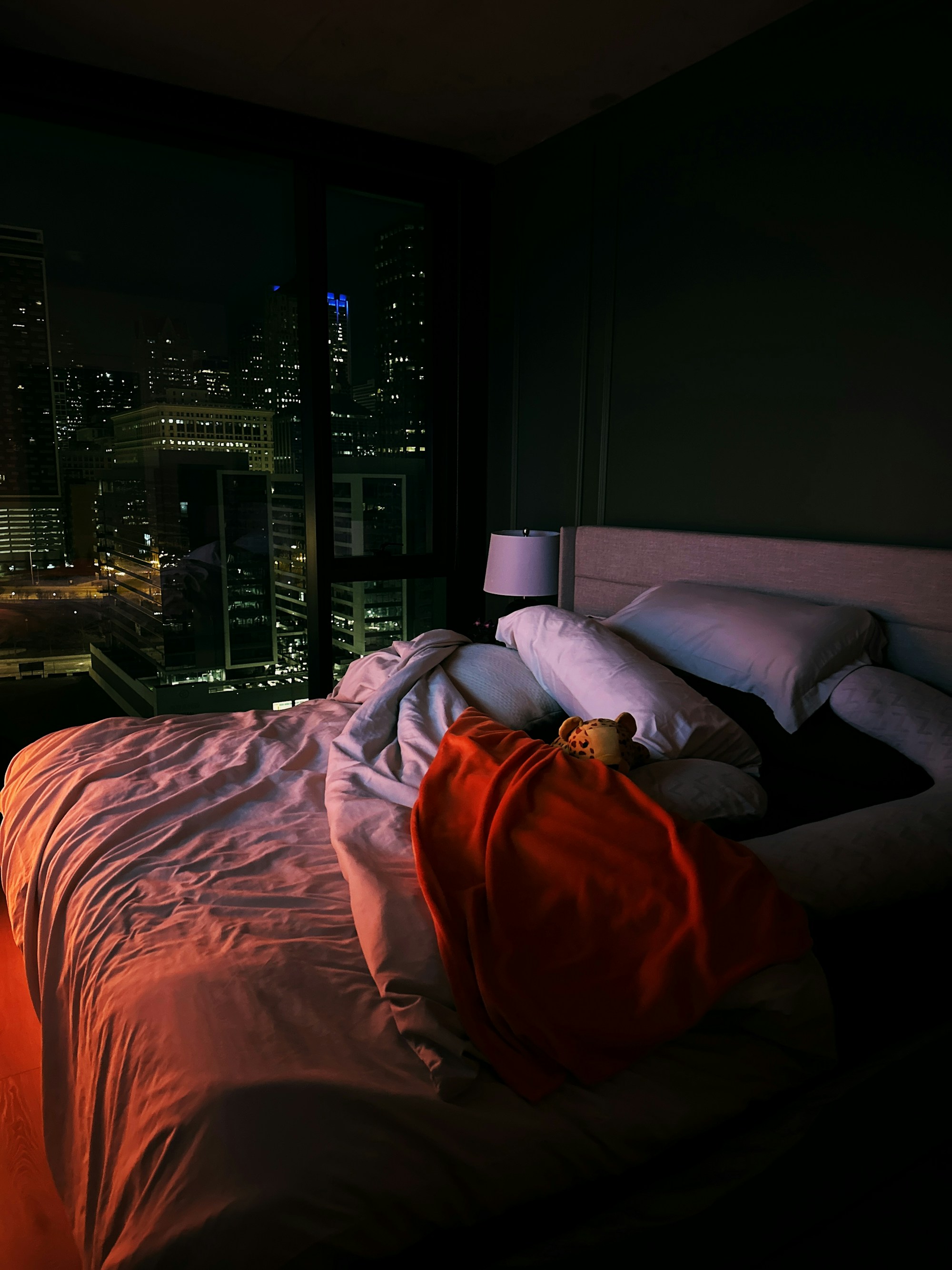
完整写在正文里,已去掉开头的说明句(「Still working on more logo prompt ideas. I like the sleep one here.」)和「Prompt:」引导语。原文第一行「2x2 grid, 16:9, do this for 4 topics that keep us up at night:」让模型一次出四个主题,但正文 FORBIDDEN 又禁止四宫格、要求只出一个标志;本项目按单张生成,去掉了这一行,并把 $ SUBJECT(共 5 处)填为 Insomnia(作者说四个里最喜欢「睡眠」那张)。其余逐字未改(「# FFFFFF」的空格是原文如此)。带占位符和 2x2 行的原文保存在 prompt.templateText。照片是一间夜里看得见城市灯光的卧室,作为「失眠」的主题参考。